.png)
.png)

SEIZA
The concept behind my seating collection is rooted in the traditional Japanese posture known as Seiza, which translates to “sitting well.” In this position, one kneels on the floor with legs folded beneath the thighs, resting the body on the heels—a pose that emphasizes mindfulness, discipline, and stillness. Inspired by this culturally rich way of sitting, I began reflecting on my own postures and how they change during periods of prolonged stillness.
As part of an experiment, I started documenting the different positions I naturally adopt when sitting for extended periods. This process revealed a need for greater freedom and flexibility in how we engage with seating—something often restricted by conventional chairs. From this insight, the idea for an ergonomic seating object emerged: a piece of furniture that supports a wide variety of sitting positions rather than enforcing a single, static posture.
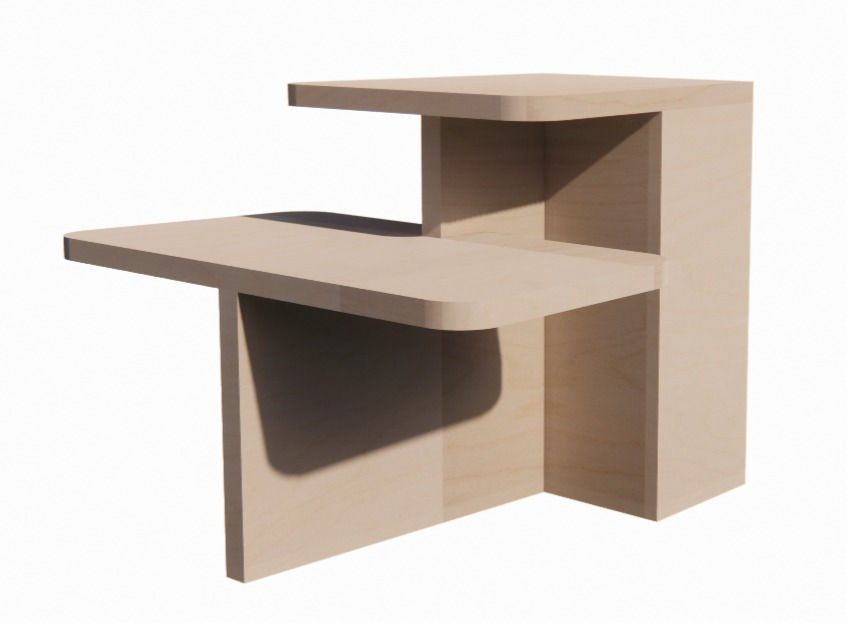
The result is a series of three ergonomic chairs designed to encourage movement and variation. Their tiered surfaces allow users to comfortably sit in the lotus position, kneel, or shift fluidly between other informal postures. This freedom supports healthier, more dynamic sitting, both physically and mentally.
Each chair in the collection shares a unified concept, yet maintains its own individual character. Great care was taken to strike a harmonious balance between function and form, as seen in the considered material choices and the refined detailing of each piece.
For the construction, I selected birch plywood—a material known for both its strength and visual elegance. The layered composition of the plywood provides structural integrity while offering a distinctive aesthetic: the rhythmic pattern of the crosscut edges becomes an integral design element. The light, neutral tone of birch allows the chairs to integrate seamlessly into a variety of interior spaces, while the natural variability of the material ensures that each object remains unique.
This seating collection is not just about how we sit, but about how we feel while sitting. It invites the user to move, shift, and reconnect with the act of sitting as an intentional, fluid practice.